Esther Creek Tide Gate highlights
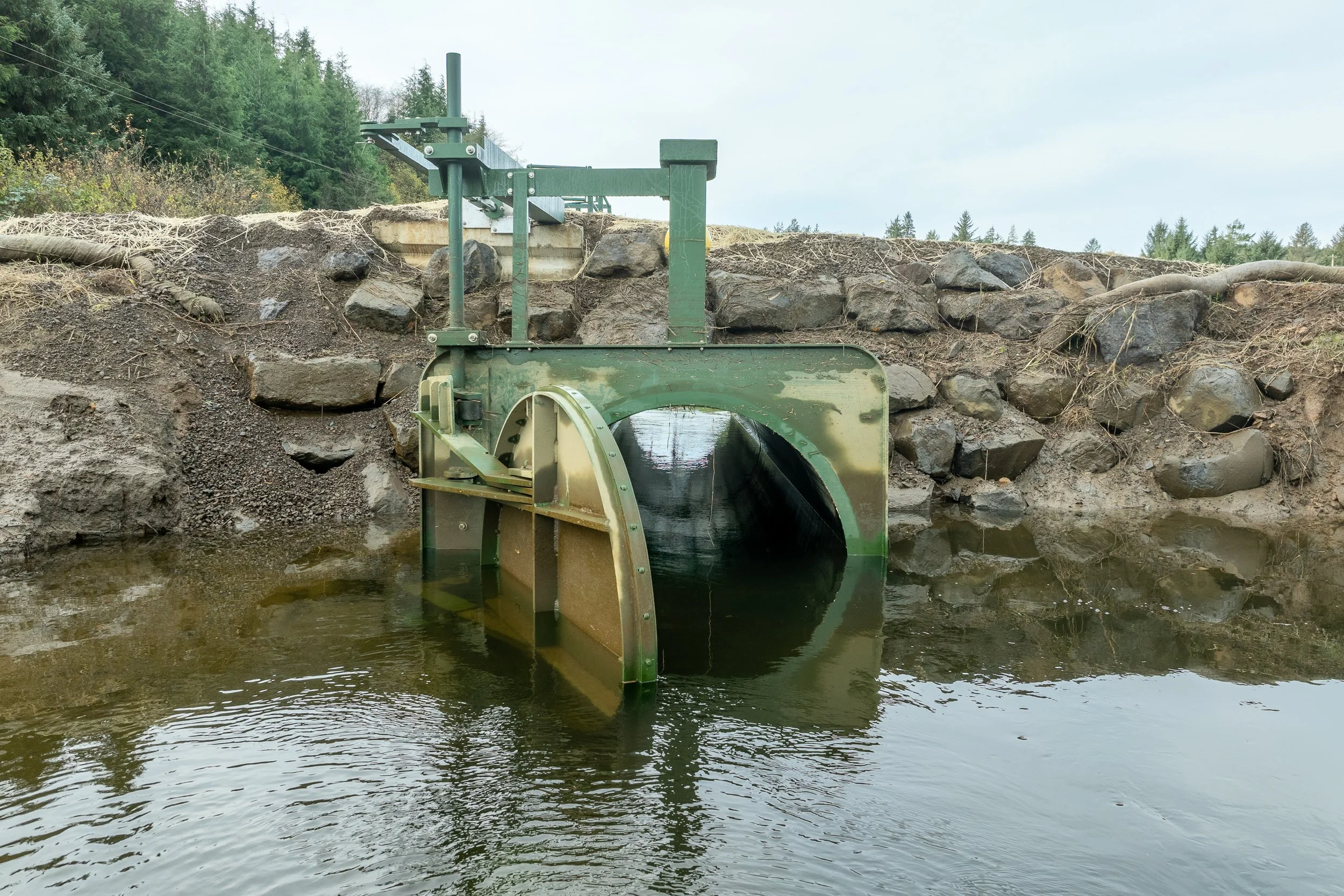
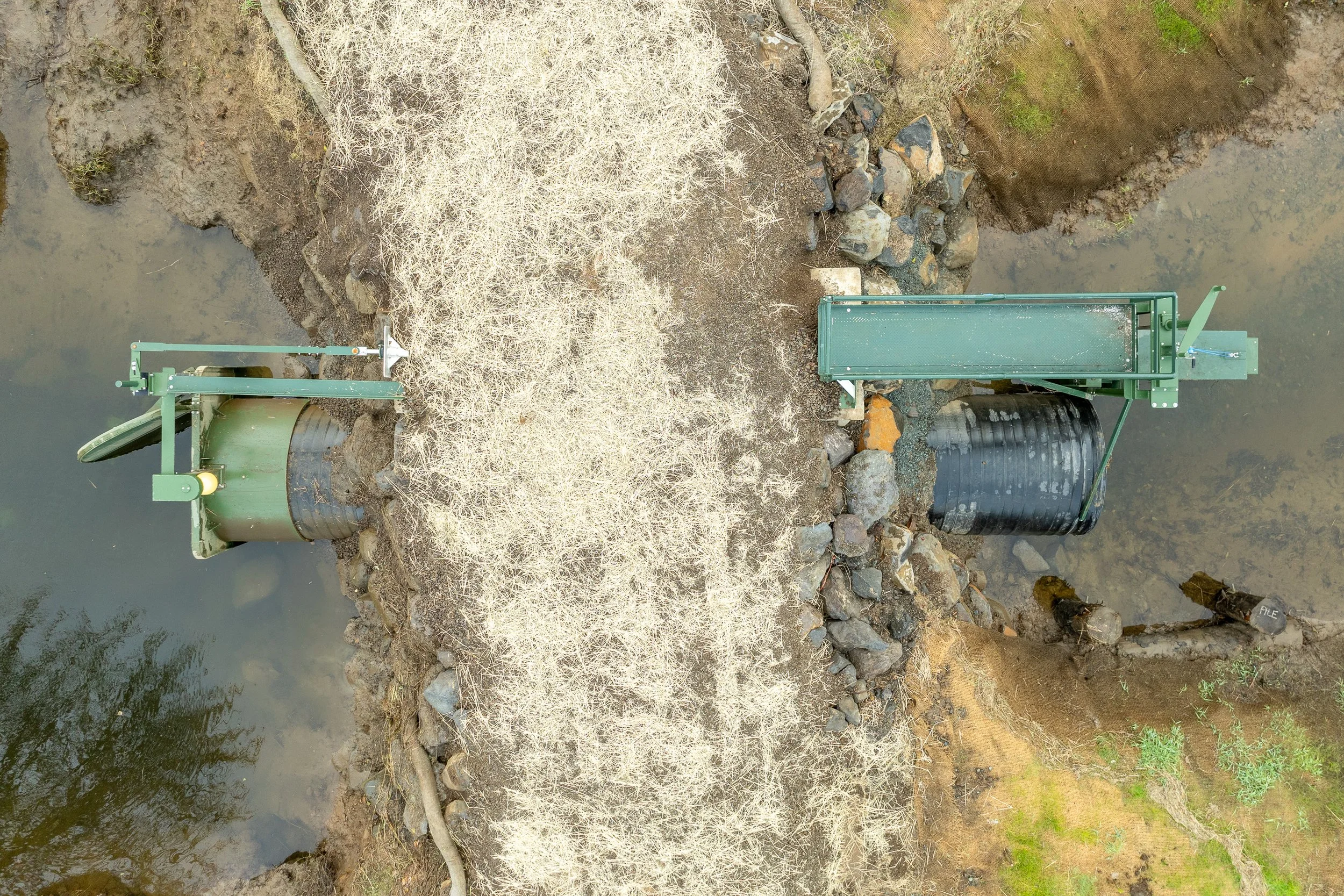
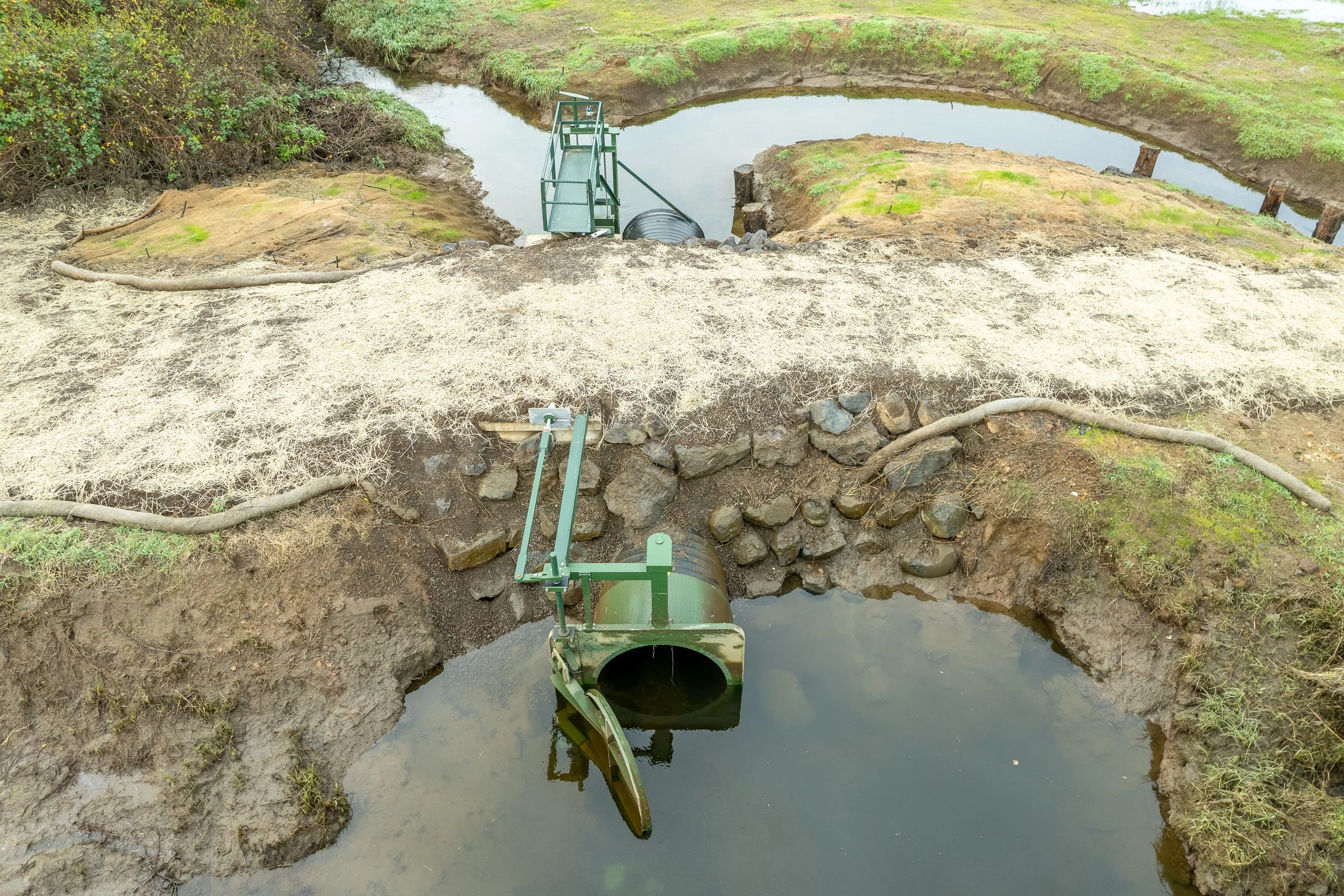
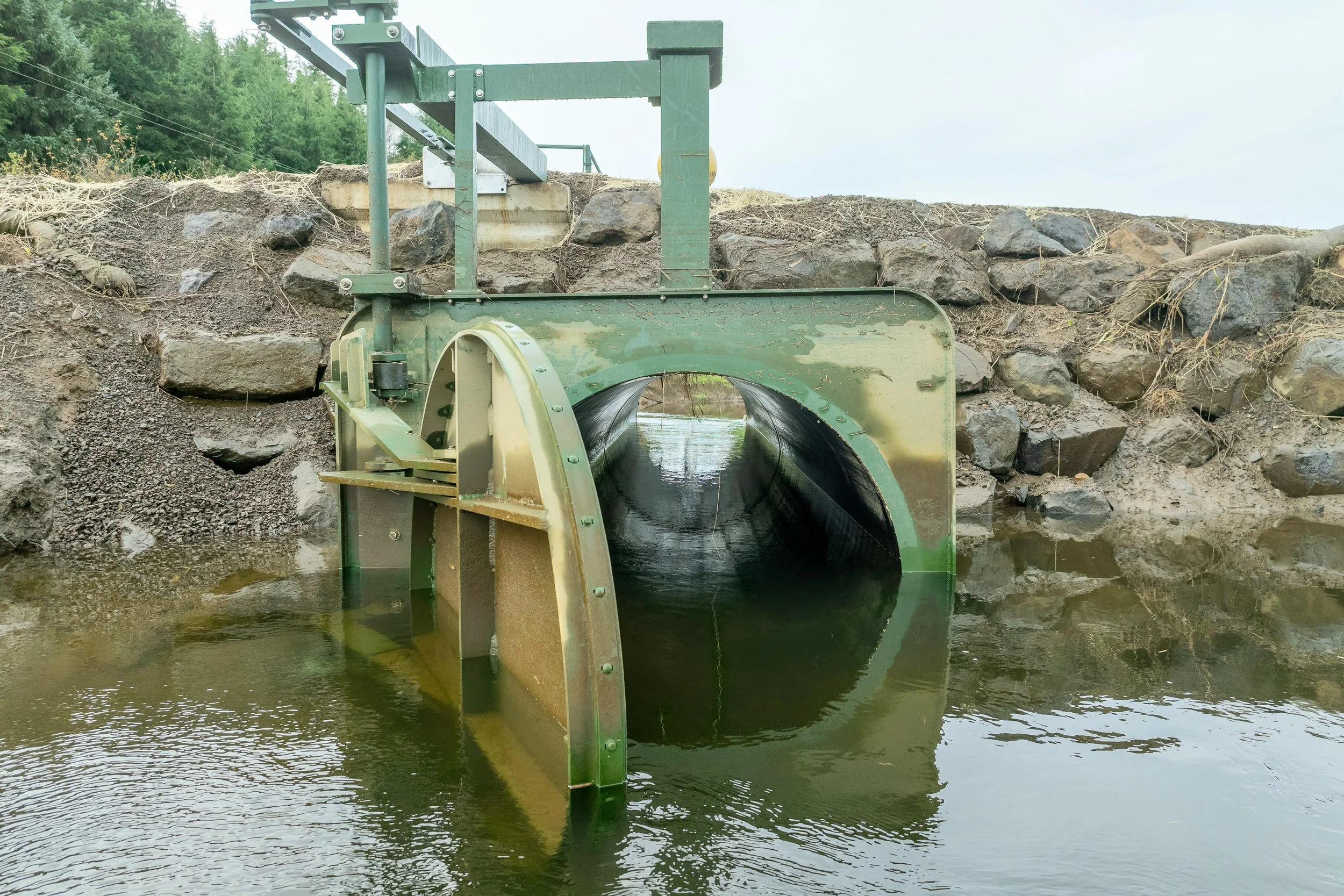
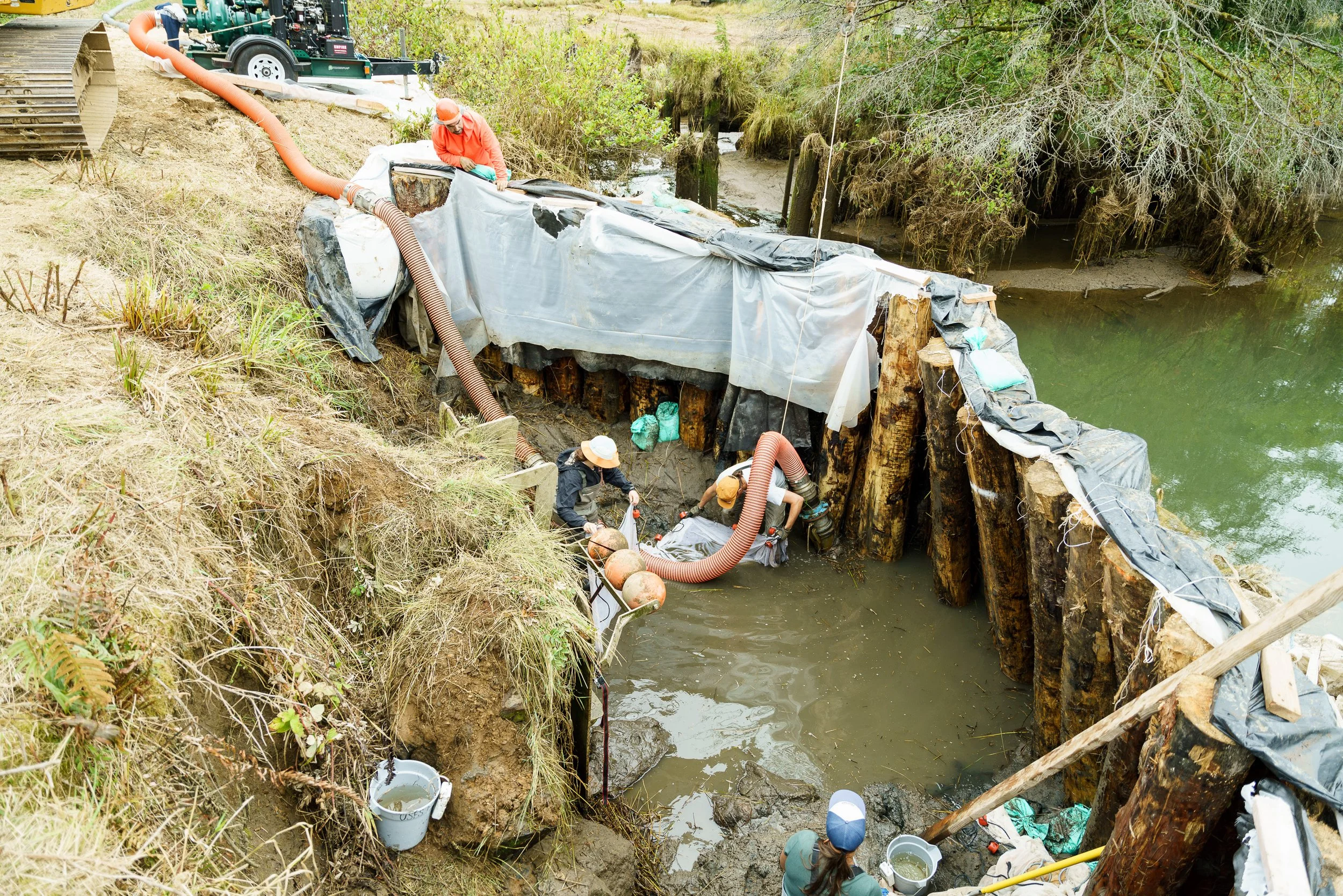
The new tide gate is fitted with a Muted Tidal Regulator (MTR) with marine grade aluminum piping 58’ long and 6’ in diameter to meet fish passage standards.
“This tide gate replacement project displays how landowners and restoration can work together to improve fish passage. It is a pilot project for improving fish passage on the North Coast.
”
Project oVerview
Started: 1/22 Completed: 10/25
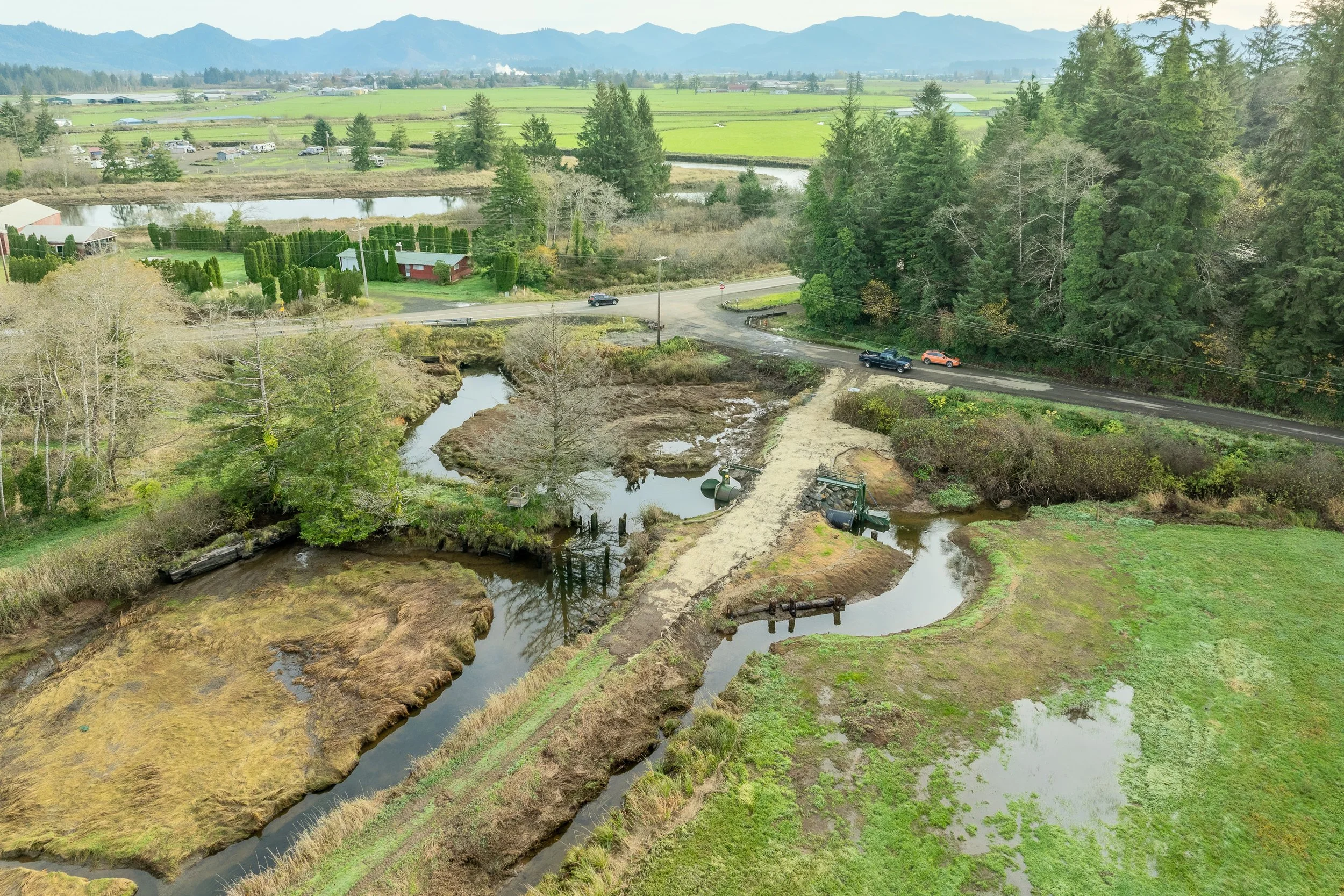
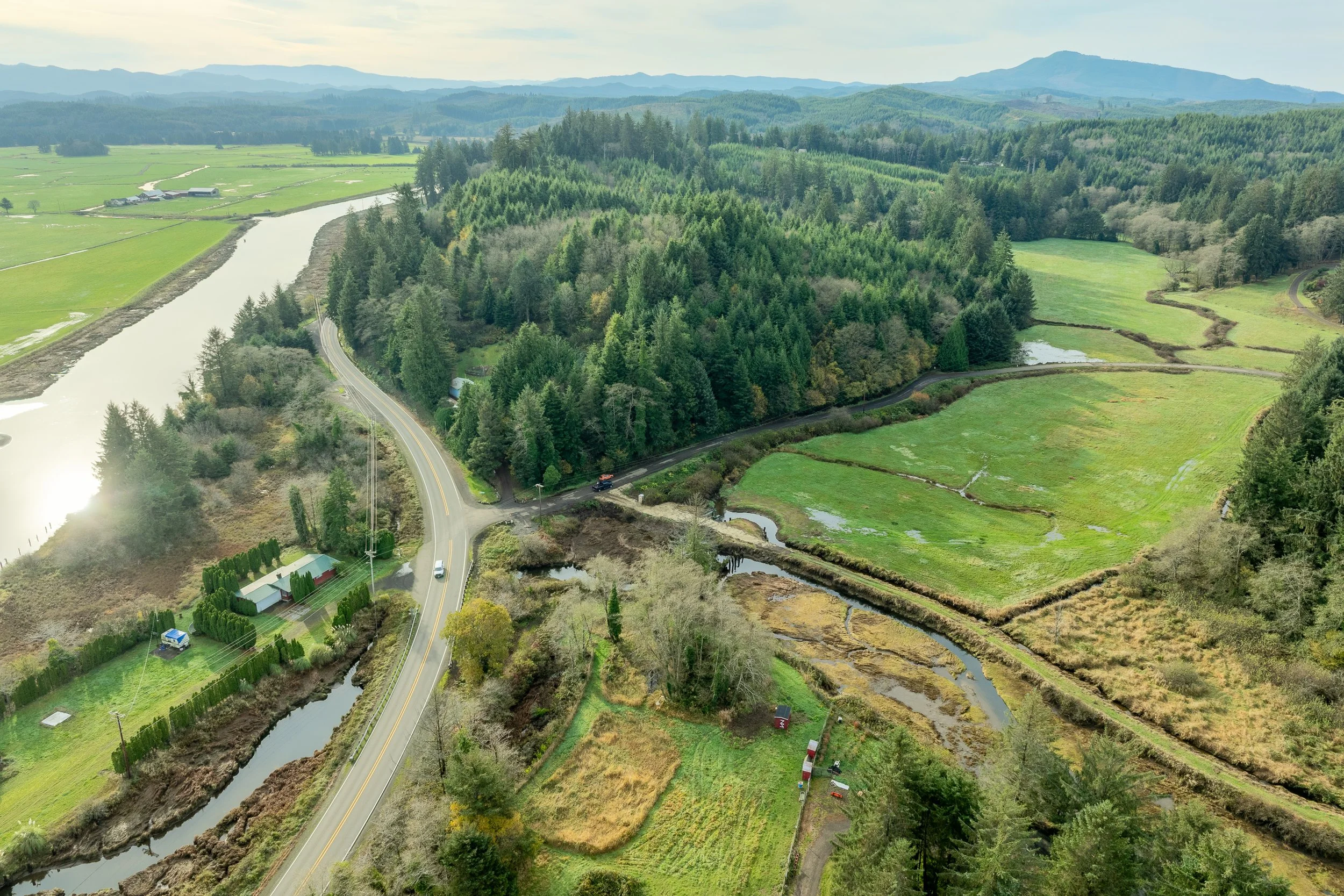
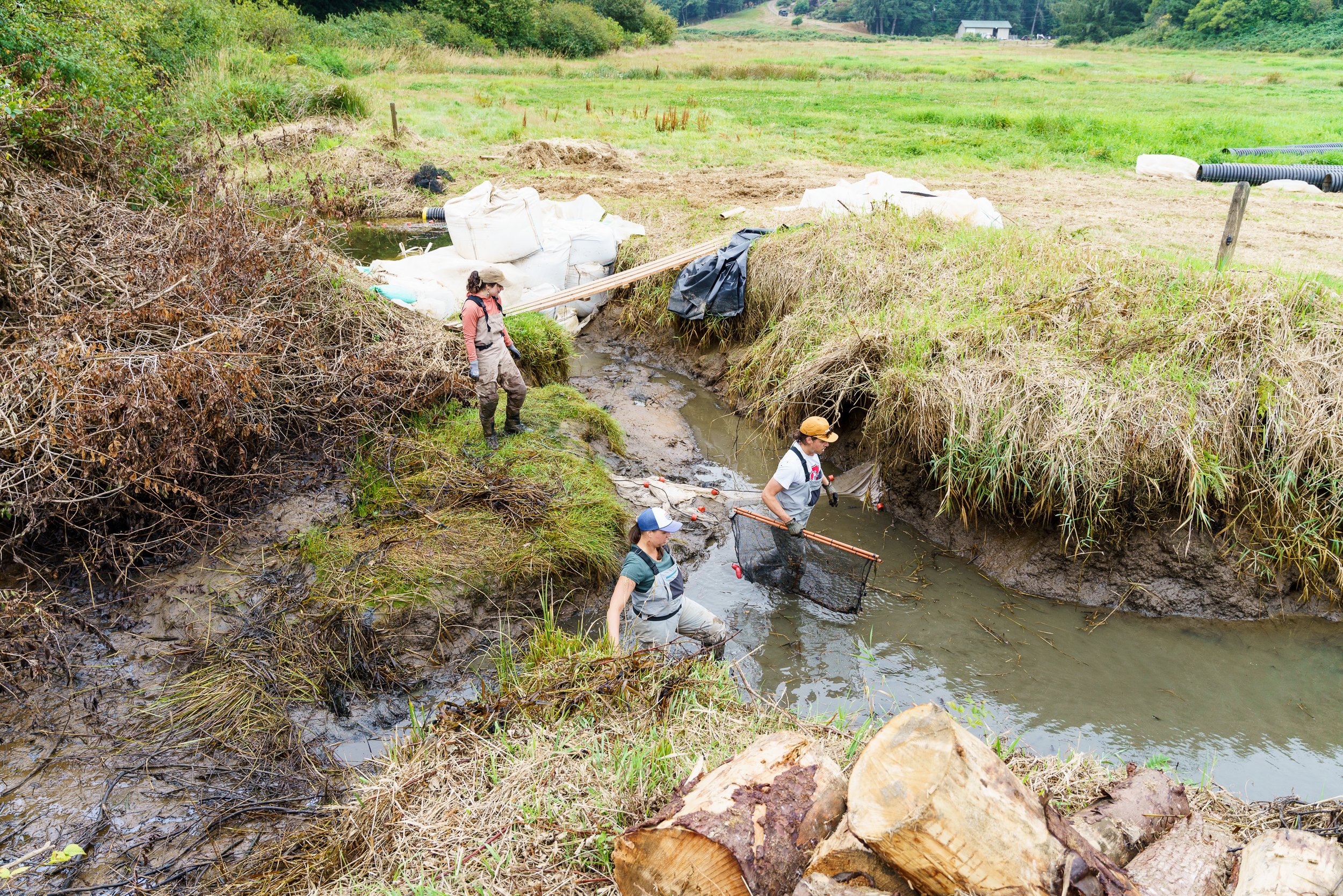
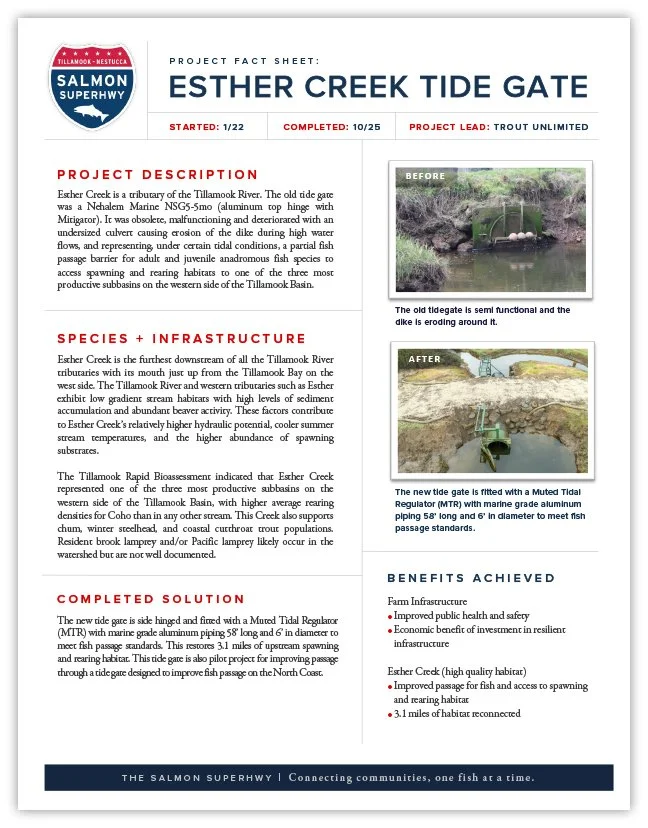
Esther Creek is a tributary of the Tillamook River. The old tide gate was a Nehalem Marine NSG5-5mo (aluminum top hinge with Mitigator). It was obsolete, malfunctioning and deteriorated with an undersized culvert causing erosion of the dike during high water flows, and representing, under certain tidal conditions, a partial fish passage barrier for adult and juvenile anadromous fish species to access spawning and rearing habitats to one of the three most productive subbasins on the western side of the Tillamook Basin.
Completed Solution
The new tide gate is side hinged and fitted with a Muted Tidal Regulator (MTR) with marine grade aluminum piping 58’ long and 6’ in diameter to meet fish passage standards. This restores 3.1 miles of upstream spawning and rearing habitat. This tide gate is also pilot project for improving passage through a tide gate designed to improve fish passage on the North Coast.
Highly successful Partnership
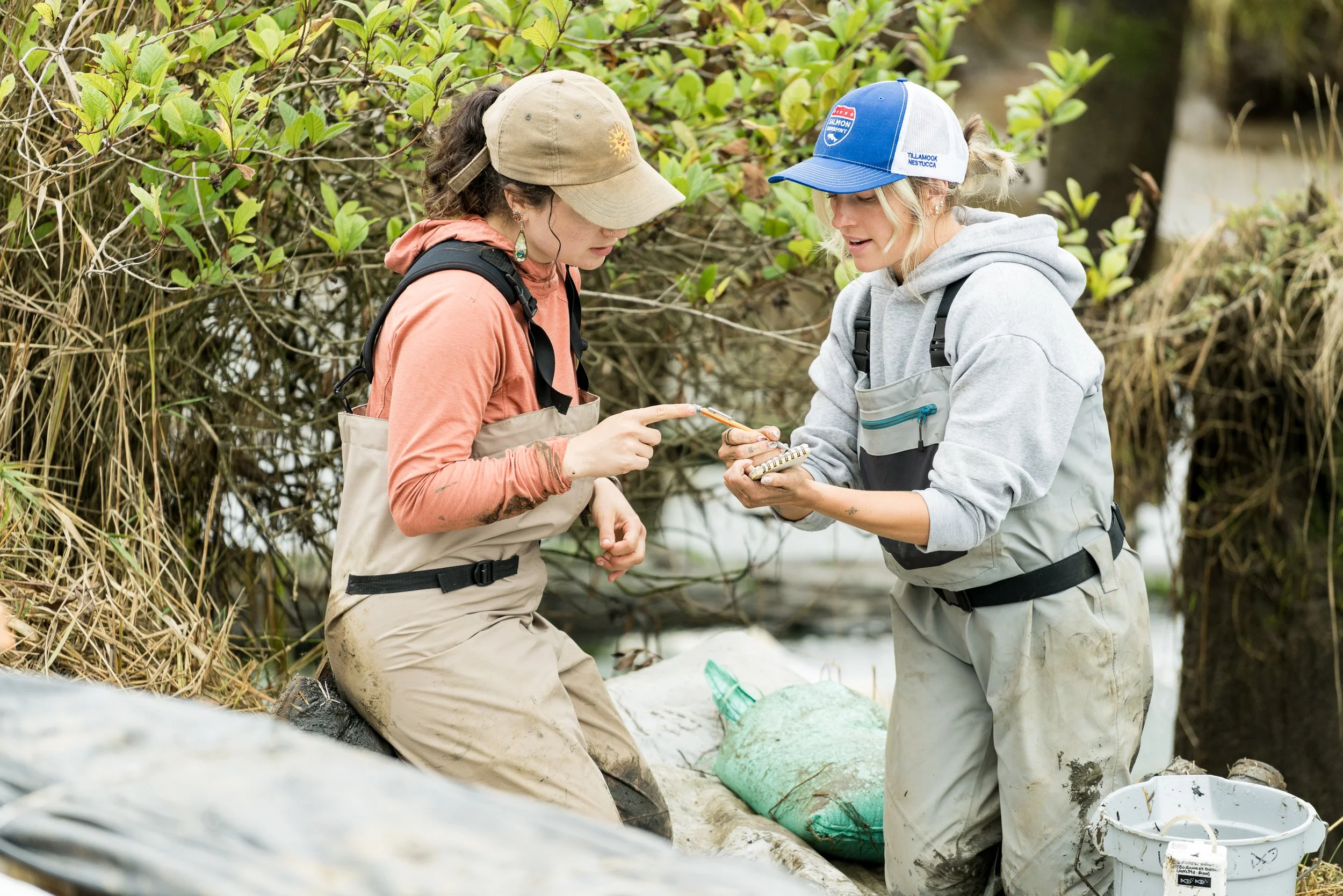
The Esther Creek Tide Gate Project was successfully implemented with the close collaboration of Salmon SuperHwy partners. Federal and state agencies along with local non-profits and private landowners combined technical skills and funding to reopen this important local road and reconnect high quality spawning and rearing habitat for Oregon’s anadromous fish.
Trout Unlimited worked closely with the US Forest Service and National Oceanic and Atmospheric Administration to complete permits and even more partners to implement this project.
Species + infrastructure
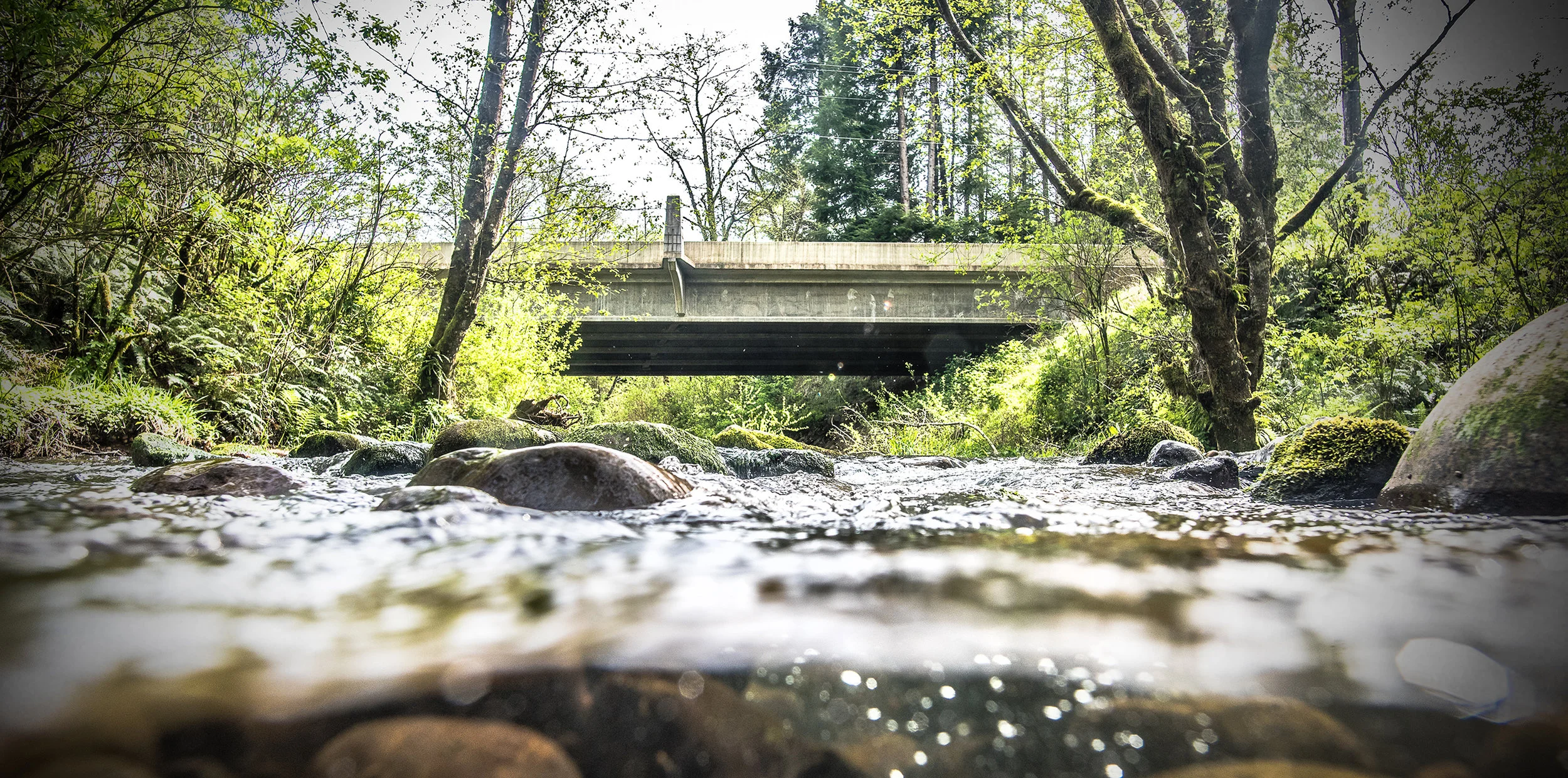
Esther Creek is the furthest downstream of all the Tillamook River tributaries with its mouth just up from the Tillamook Bay on the west side. The Tillamook River and western tributaries such as Esther exhibit low gradient stream habitats with high levels of sediment accumulation and abundant beaver activity. These factors contribute to Esther Creek’s relatively higher hydraulic potential, cooler summer stream temperatures, and the higher abundance of spawning substrates.
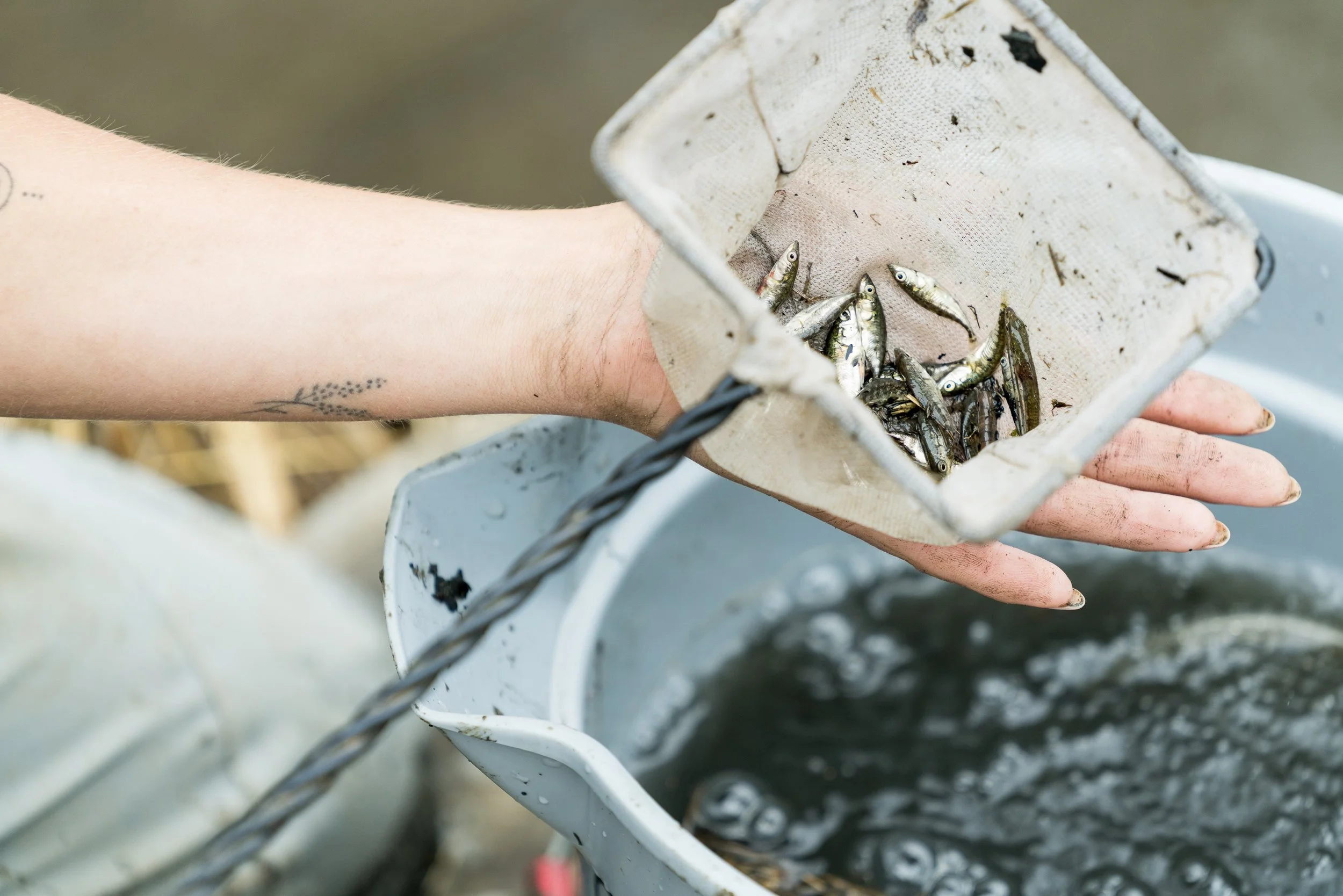
The Tillamook Rapid Bioassessment indicated that Esther Creek represented one of the three most productive subbasins on the western side of the Tillamook Basin, with higher average rearing densities for Coho than in any other stream. This Creek also supports chum, winter steelhead, and coastal cutthroat trout populations. Resident brook lamprey and/or Pacific lamprey likely occur in the watershed but are not well documented.
Benefits
Farm Infrastructure
Improved public health and safety
Economic benefit of investment in resilient infrastructure
Esther Creek (high quality habitat)
Improved passage for fish and access to spawning and rearing habitat
3.1 miles of habitat reconnected
Partners
Business Oregon, US Fish & Wildlife Service, Tillamook Estuary Partnership, Trout Unlimited, Oregon Department of Fish and Wildlife, US Forest Service, National Oceanic and Atmospheric Administration, Stimson Lumber, Oregon Watershed Enhancement Board and Tillamook Soil and Water Conservation District.
cost + funding
TOTAL PROJECT COST: $ 616,351 (includes in-kind)
ODFW: $350,000
USFS: $75,000
NOAA: $183,917
NOAA (Permitting Assistance): $4,000 in-kind
Stimpson Lumber (Logs): $3,434 in-kind