Myrtle Creek highlights
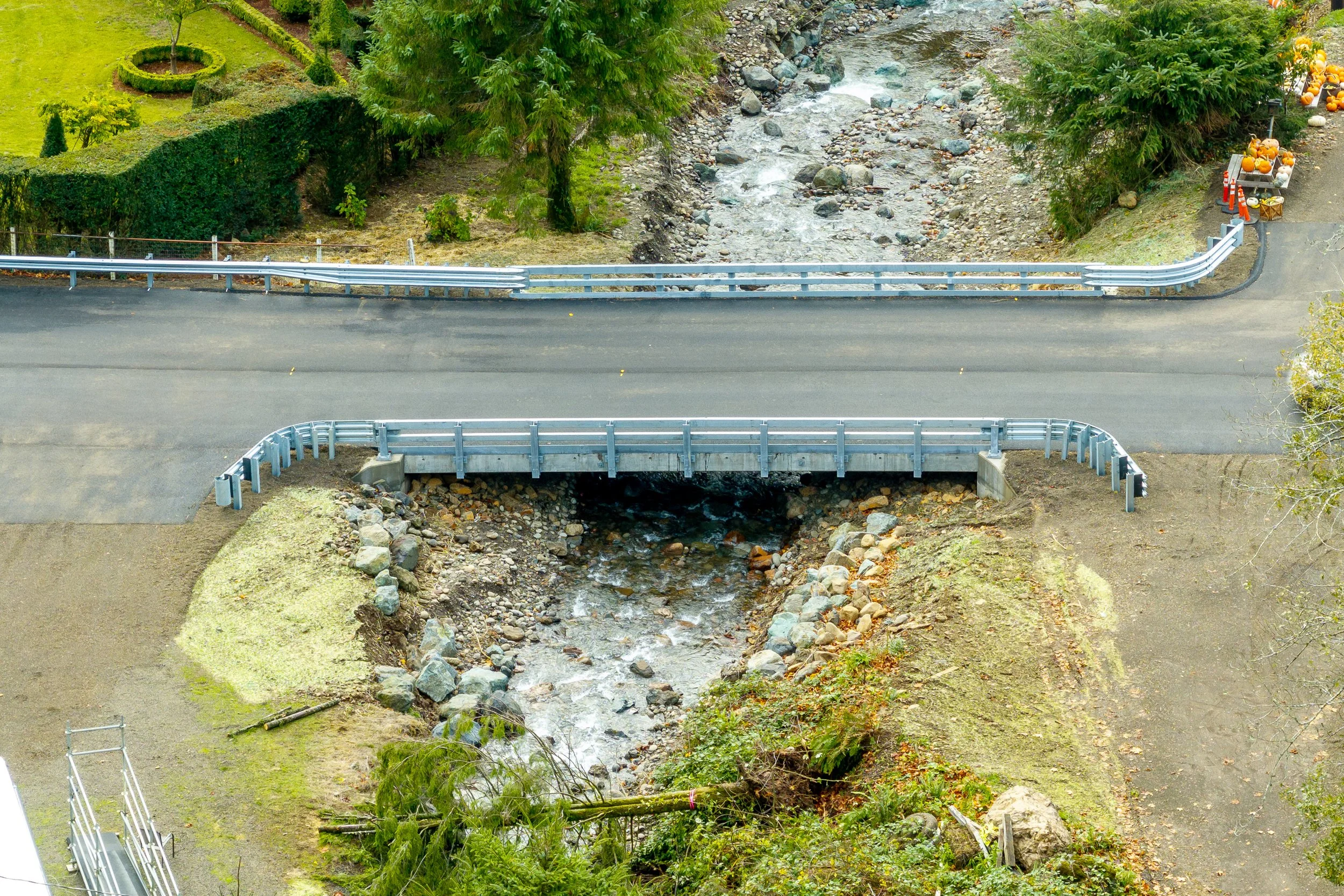
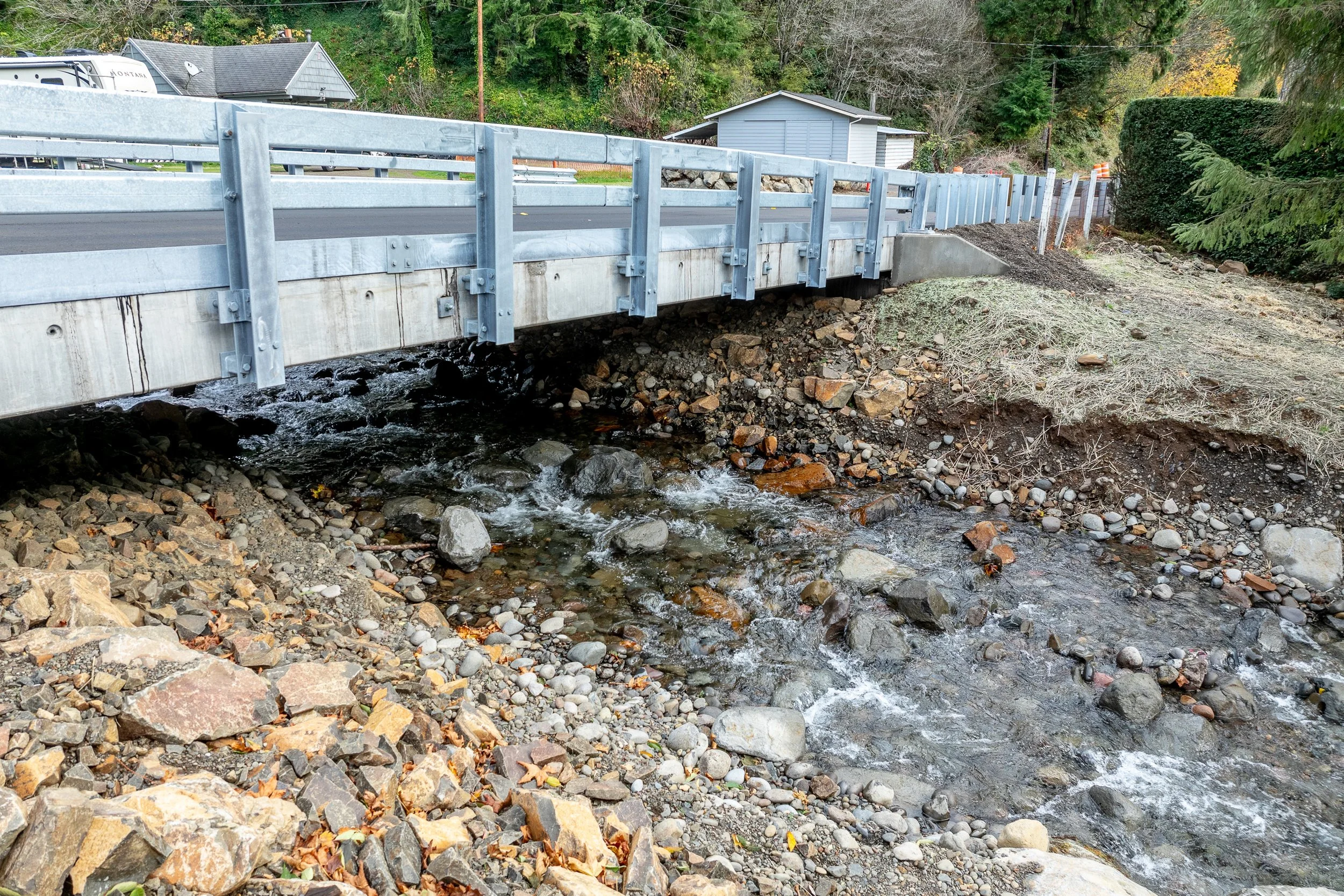
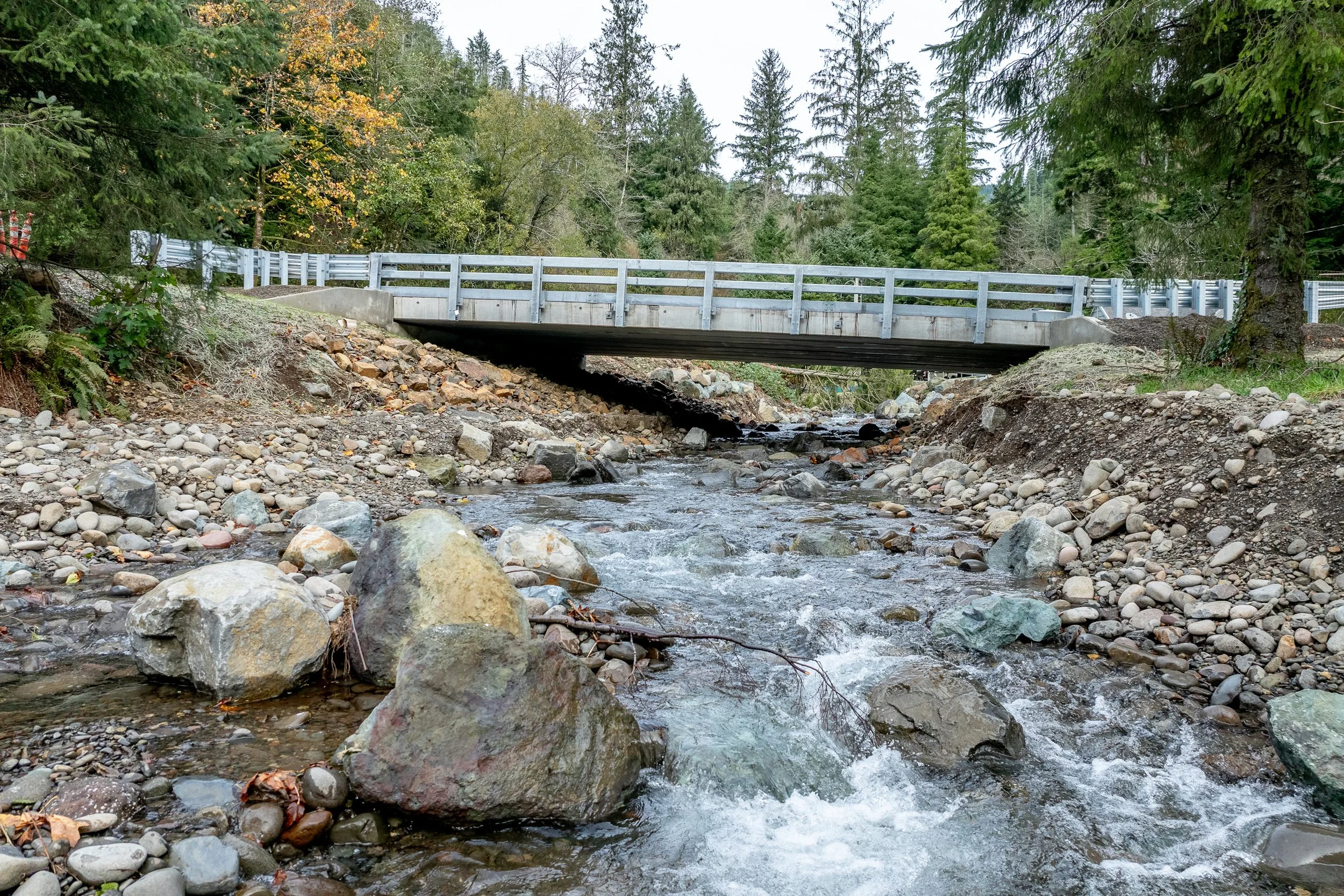
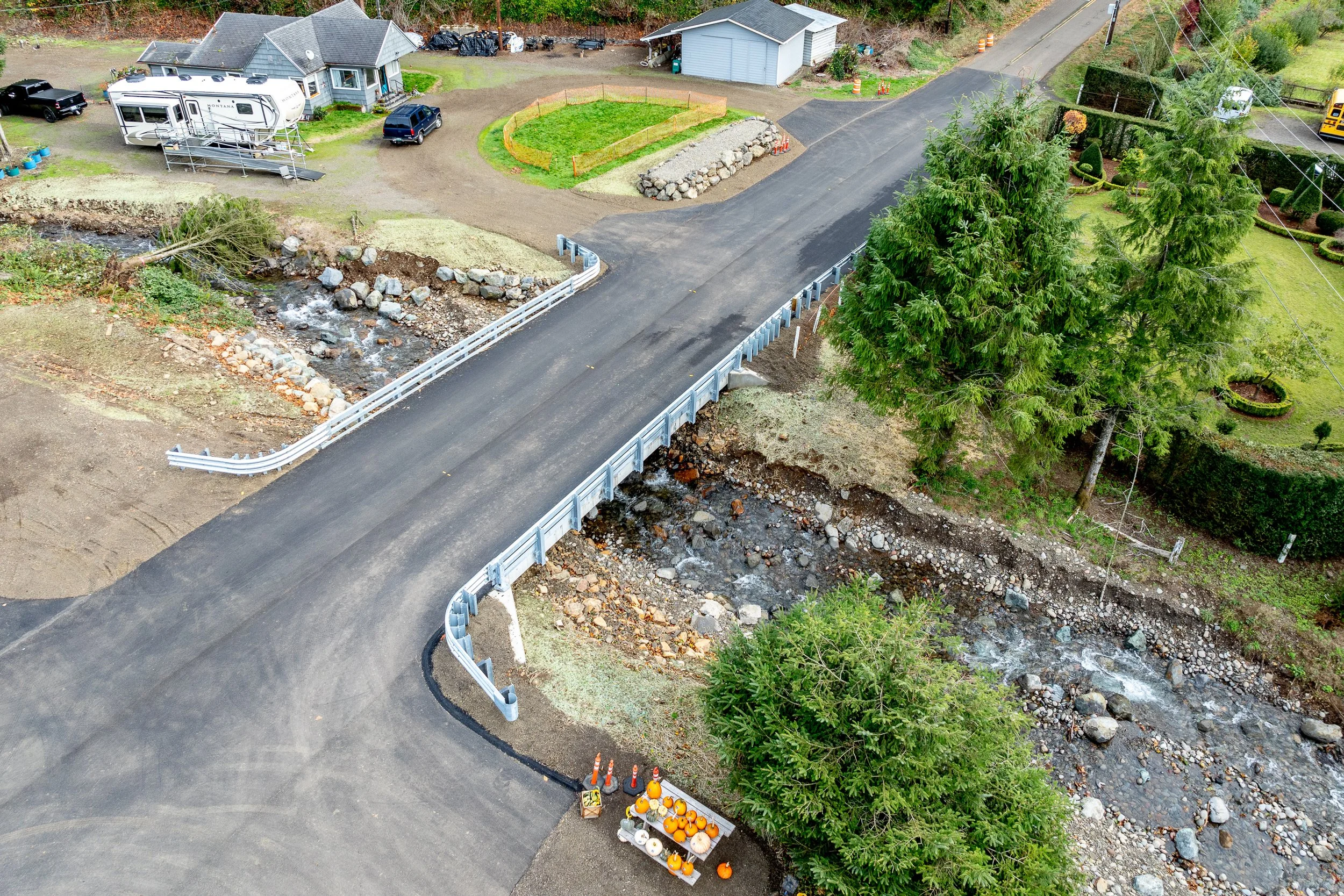
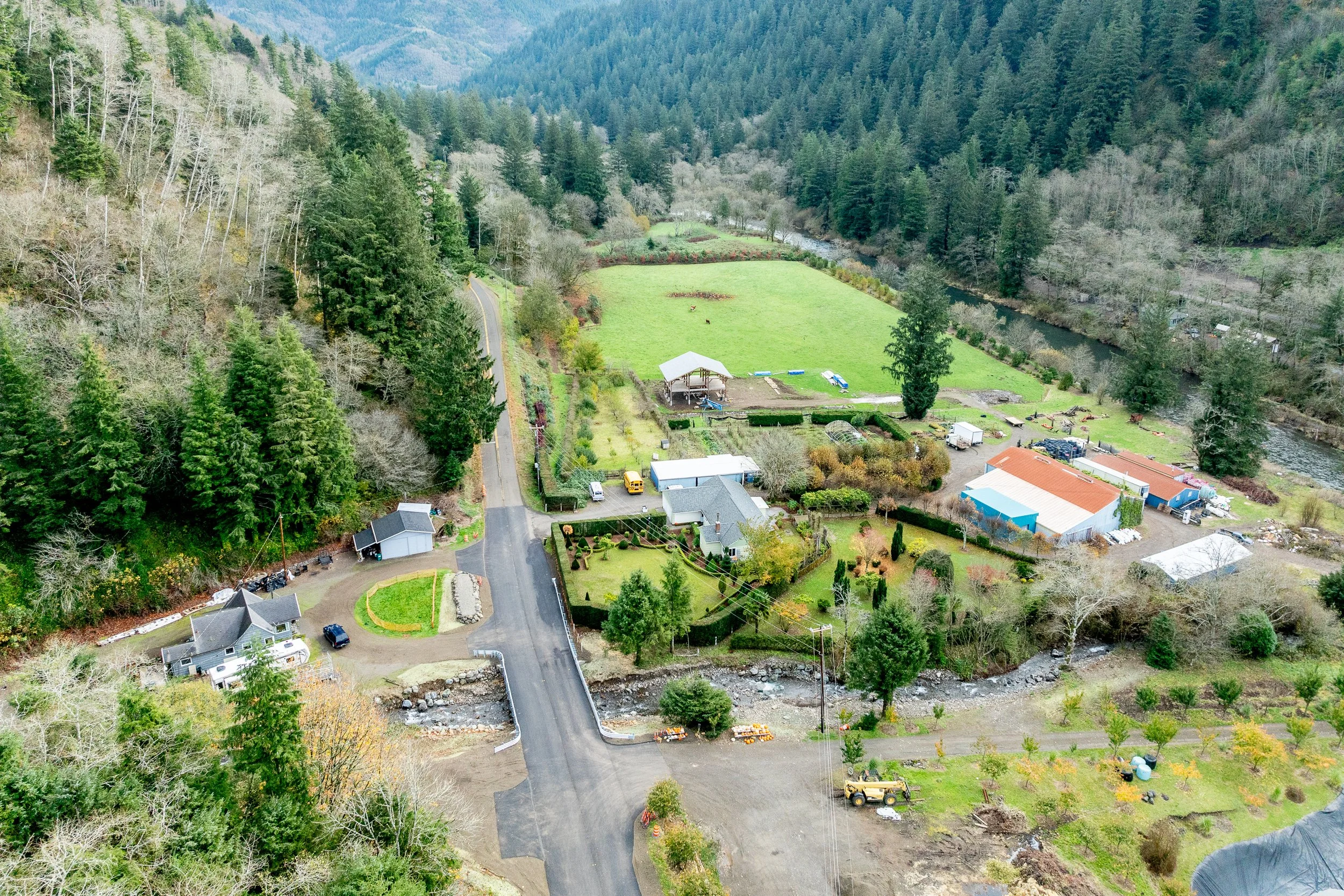
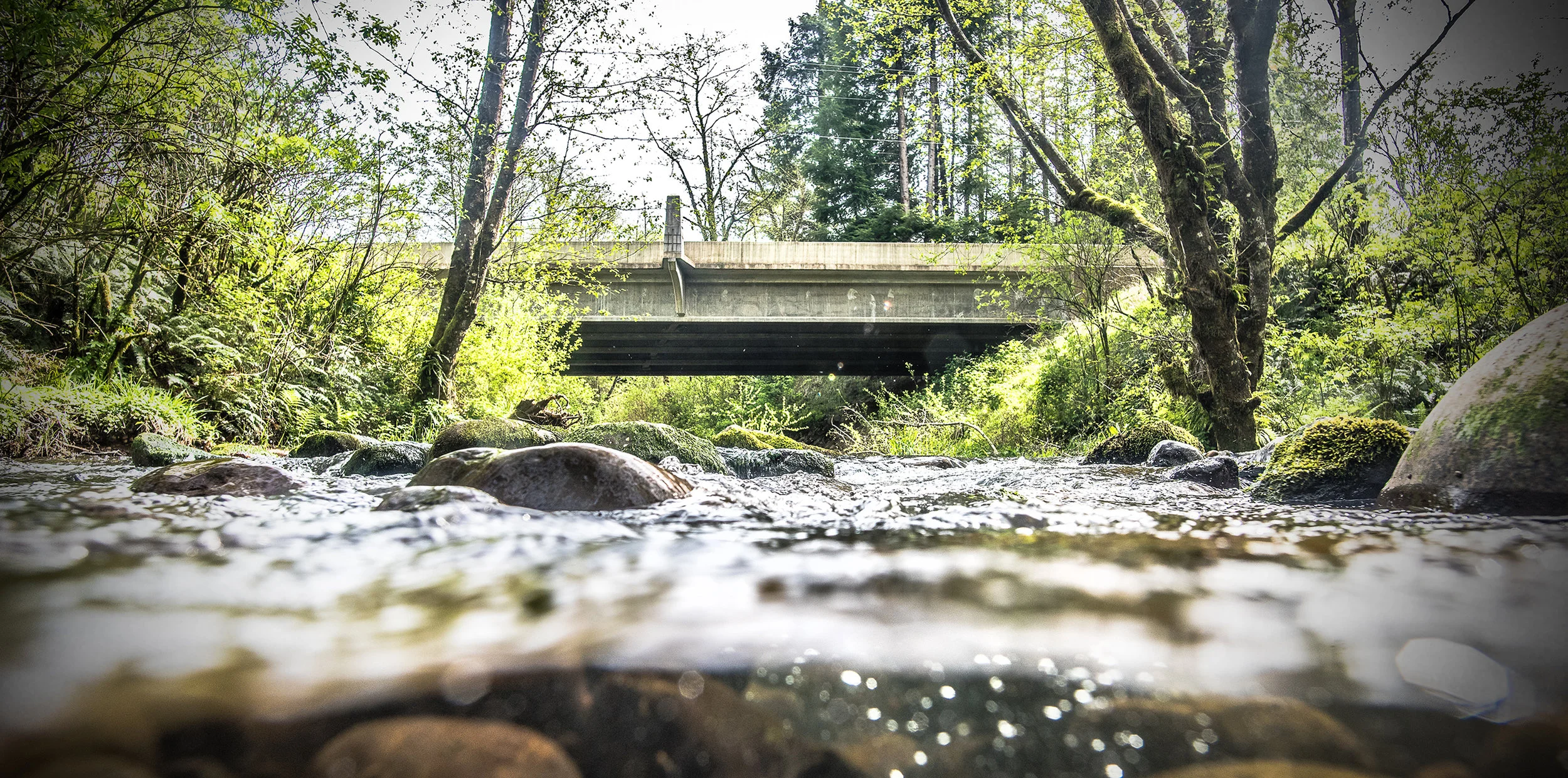
The undersized culvert was removed and replaced with a 42’ span bridge, restoring 1.6 miles of upstream spawning and rearing habitat.
“Juvenile coho were spotted days after project completion. Being able to enhance fish habitat while strengthening infrastructure and decreasing flooding made this project impressive.
”
Project oVerview
Started: 4/16* Completed: 11/25
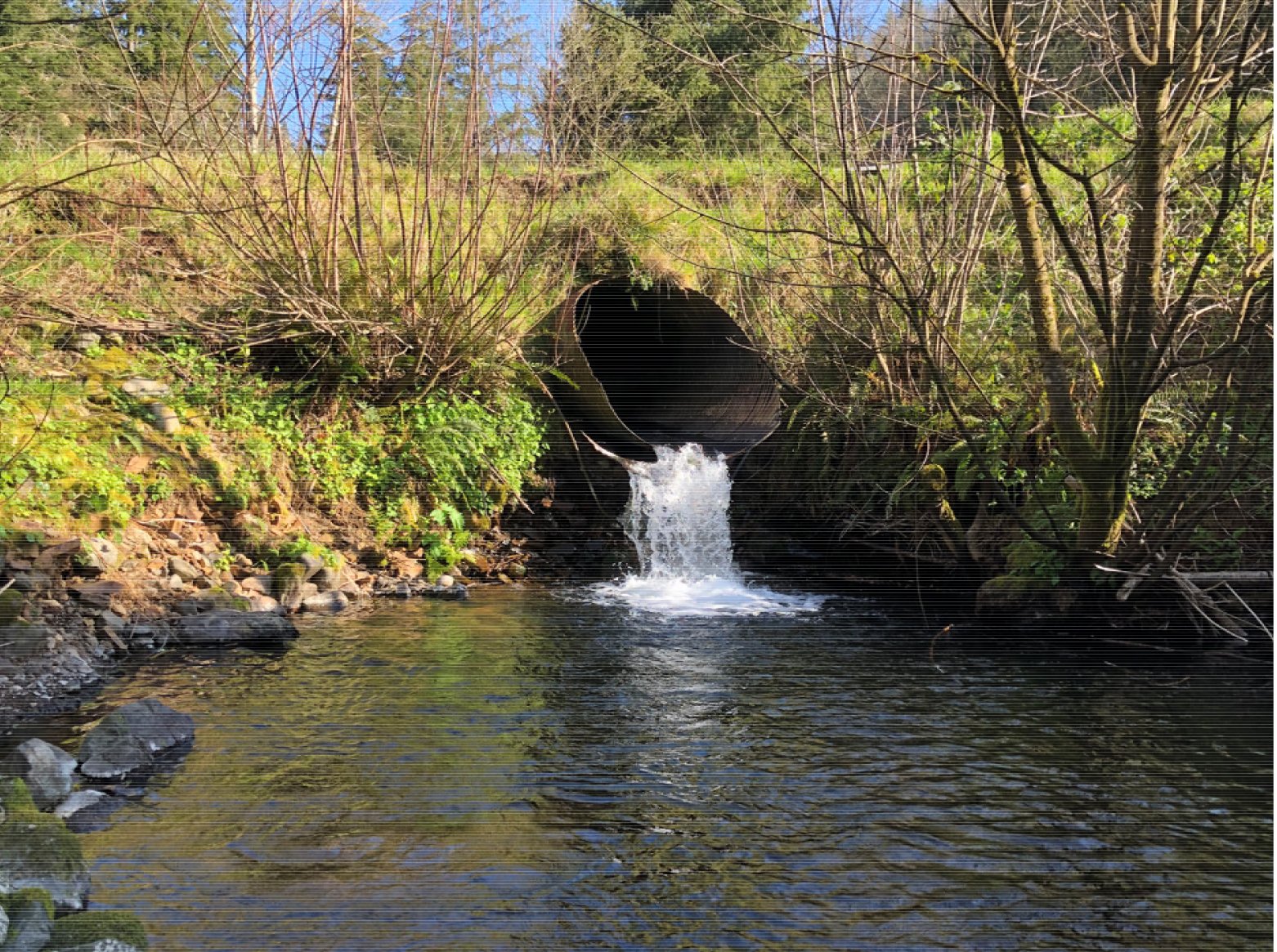
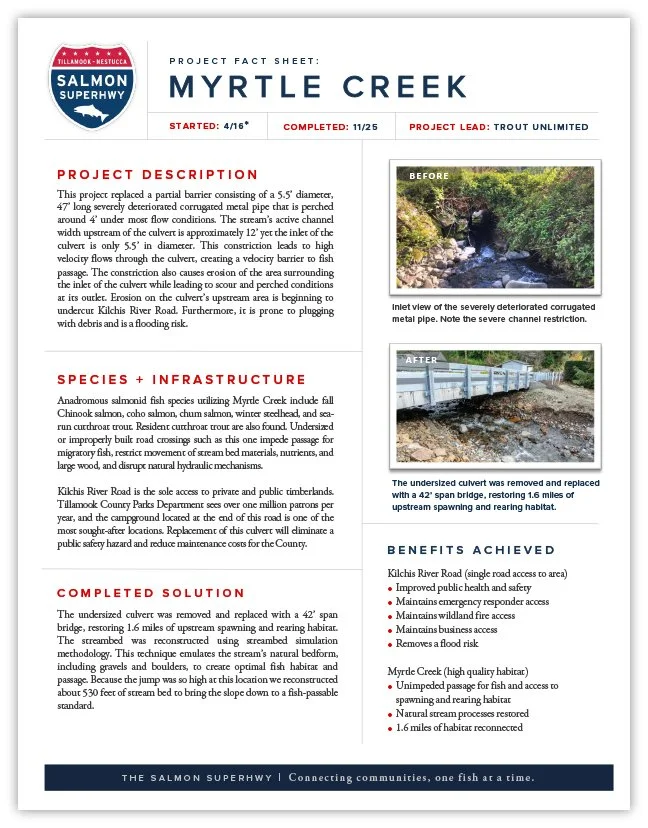
This project replaced a partial barrier consisting of a 5.5’ diameter, 47’ long severely deteriorated corrugated metal pipe that is perched around 4’ under most flow conditions. The stream’s active channel width upstream of the culvert is approximately 12’ yet the inlet of the culvert is only 5.5’ in diameter. This constriction leads to high velocity flows through the culvert, creating a velocity barrier to fish passage. The constriction also causes erosion of the area surrounding the inlet of the culvert while leading to scour and perched conditions at its outlet. Erosion on the culvert’s upstream area is beginning to undercut Kilchis River Road. Furthermore, it is prone to plugging with debris and is a flooding risk.
Completed Solution
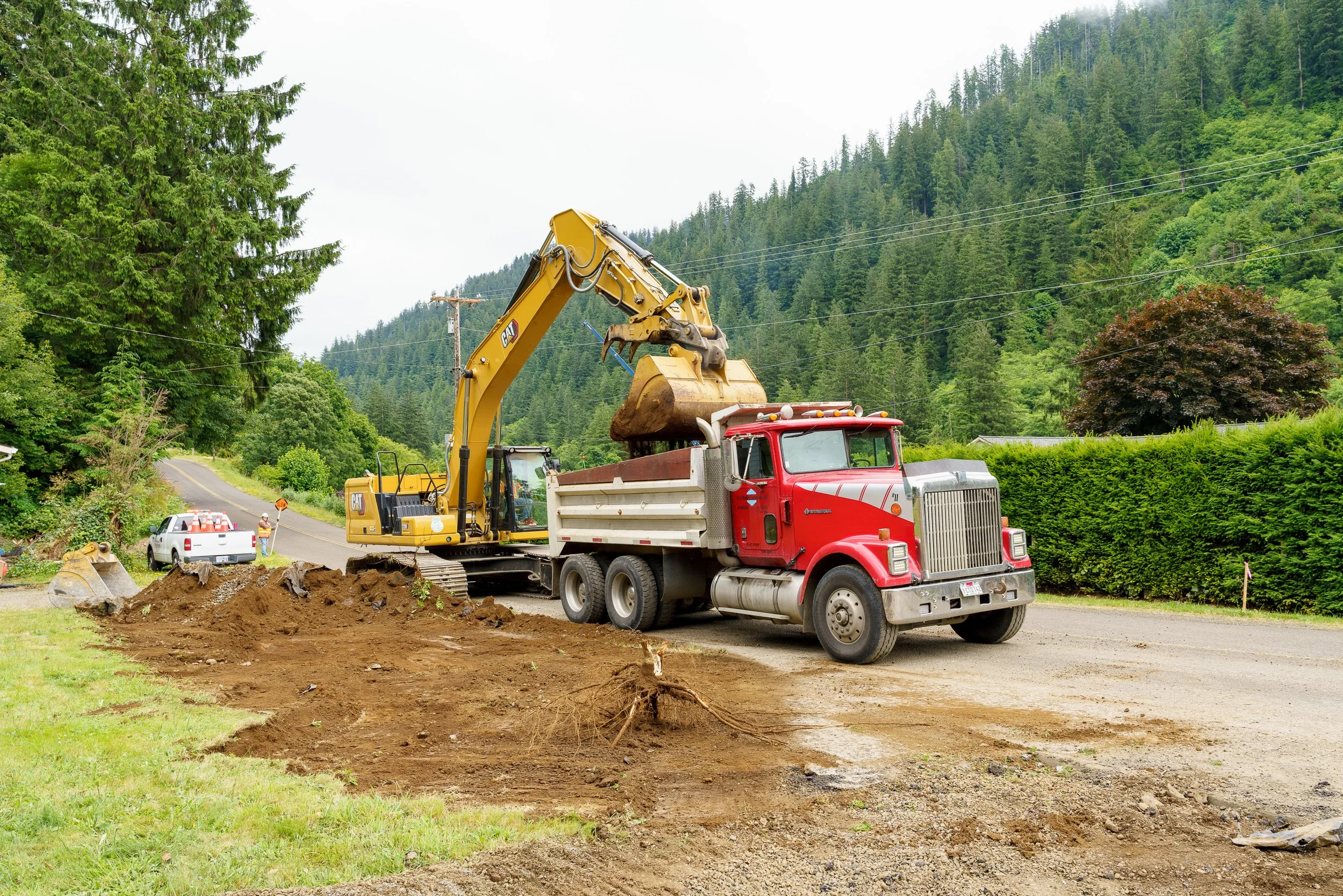
The undersized culvert was removed and replaced with a 42’ span bridge, restoring 1.6 miles of upstream spawning and rearing habitat. The streambed was reconstructed using streambed simulation methodology. This technique emulates the stream’s natural bedform, including gravels and boulders, to create optimal fish habitat and passage. Because the jump was so high at this location we reconstructed about 530 feet of stream bed to bring the slope down to a fish-passable standard.
Highly successful Partnership
The Myrtle Creek Fish Passage Project was successfully implemented with the close collaboration of Salmon SuperHwy partners. Federal and state agencies along with local non-profits and Tillamook County combined technical skills and funding to reopen this important local road and reconnect high quality spawning and rearing habitat for Oregon’s anadromous fish.
*TEP started contracting out for designs on this project in 2016. After some delays Trout Unlimited restarted the design process in 2022. TU worked closely with US Fish and Wildlife Service to complete permits and even more partners to implement this project.
Species + infrastructure
Anadromous salmonid fish species utilizing Myrtle Creek include fall Chinook salmon, coho salmon, chum salmon, winter steelhead, and sea-run cutthroat trout. Resident cutthroat trout are also found. Undersized or improperly built road crossings such as this one impede passage for migratory fish, restrict movement of stream bed materials, nutrients, and large wood, and disrupt natural hydraulic mechanisms.
Kilchis River Road is the sole access to private and public timberlands. Tillamook County Parks Department sees over one million patrons per year, and the campground located at the end of this road is one of the most sought-after locations. Replacement of this culvert will eliminate a public safety hazard and reduce maintenance costs for the County.
Benefits
Kilchis River Rd. (single road access to area)
Improved public health and safety
Maintains emergency responder access
Maintains wildland fire access
Maintains business access
Removes a flood risk
Myrtle Creek (high quality habitat)
Unimpeded passage for fish and access to spawning and rearing habitat
Natural stream processes restored
1.6 miles of habitat reconnected
Partners
Tillamook County, US Fish & Wildlife Service, Tillamook Estuary Partnership, Trout Unlimited, Oregon Department of Fish and Wildlife, US Department of Transportation, and National Oceanic and Atmospheric Administration
cost + funding
TOTAL PROJECT COST: $2,074,718 (includes in-kind)
ODFW: $855,239
USFWS: $439,745
USDOT: $532,414
NOAA: $238,320
USFWS (Technical Assistance): $4,000 in-kind
TCPW (Technical Assistance): $5,000